

A meeting was held under the chairmanship of Nurlybek Nalibayev, the First Deputy Prime Minister of Kazakhstan, to discuss KEGOC's operational performance, the delivery of investment projects, and the integration of digital solutions into power system management.
Nabi Aitzhanov, Chairman of the Management Board of JSC KEGOC, delivered a report. He stated that the company's operational performance across core services continues to demonstrate positive momentum. KEGOC consistently meets its approved targets and key performance indicators year-on-year. In 2025, the maintenance programme was completed with an 18% overachievement of the target, while the actual capital expenditure for the investment programme reached KZT 99.5 billion, exceeding the annual plan. For 2026, the total planned investment is set at KZT 181.9 billion.
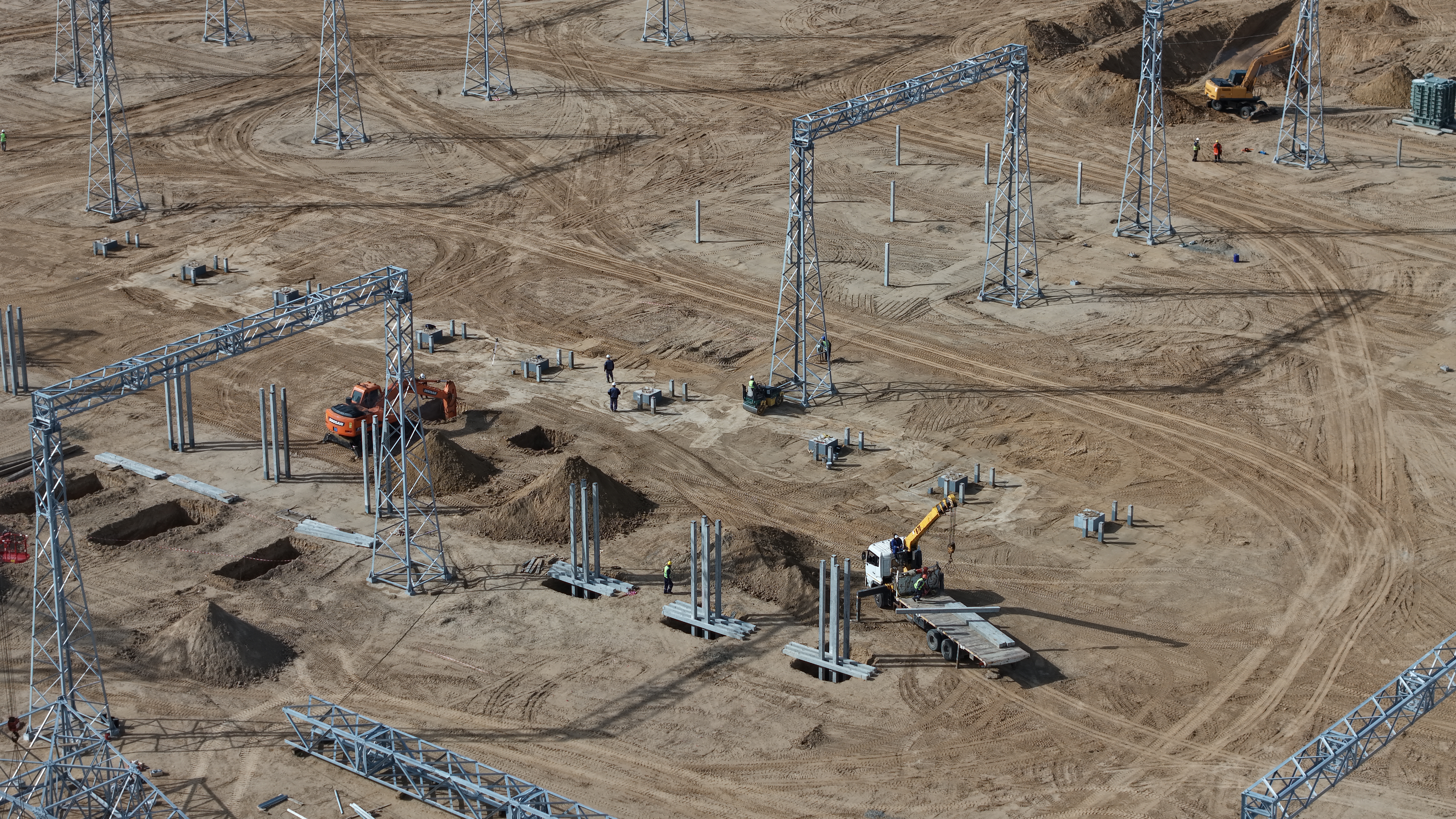
The investment programme places a primary focus on the development of the National Power Grid (NPG). In line with the directives of the Head of State, KEGOC is delivering two major projects: 'South Kazakhstan Electricity Transmission Reinforcement Project' and 'West Kazakhstan Electricity Transmission Interconnection Project'. Following the President's instructions, the timelines for these projects have been accelerated. Both projects are progressing according to schedule and are slated for completion in 2027, ahead of the original deadlines.
FOR REFERENCE: The 'South Kazakhstan Electricity Transmission Reinforcement Project involves the construction of the 500 kV Shu-Zhambyl and Zhambyl-Shymkent overhead lines, alongside the expansion of the Shu, Zhambyl, and Shymkent substations. Its delivery will increase the grid's transmission capacity on the Almaty-Zhambyl section from 1,100 MW to 1,500 MW, thereby enhancing the reliability of power supply to southern Kazakhstan.
The 'West Kazakhstan Electricity Transmission Interconnection Project’ includes the construction of the 500 kV Ulke-Karabatan transmission line, spanning 604.3 km, as well as the expansion of key grid facilities. This initiative will integrate western Kazakhstan's generation capacity into the broader national energy balance and improve the region's power supply reliability.
Particular attention was given to prospective grid development projects. As part of its strategic vision for the development of the NPG up to 2035, KEGOC has identified a pipeline of key projects that entail the construction of approximately 7,000 km of new power transmission lines. These include reinforcing Astana's external power supply with the construction of a new 500 kV digital substation, enhancing the transit capacity of the Kazakhstan UPS via the construction of a North-South direct current line, and developing the power grids in the Almaty and Zhetysu regions.
"The development of the National Power Grid is currently advancing in tandem with the modernisation of our approaches to power system management. KEGOC is systematically deploying modern digital tools, strengthening grid infrastructure, and delivering the projects essential for the sustainable growth of the economy and the reliable supply of electricity to consumers in Kazakhstan," noted Nabi Aitzhanov.
The company is actively integrating digital technologies and artificial intelligence (AI) solutions. KEGOC is currently implementing 13 AI-driven projects aimed at improving power system performance, accelerating decision-making, advancing online monitoring, forecasting renewable energy generation, analysing grid operating conditions, and enhancing the efficiency of operational processes. The digital and smart solutions already deployed have yielded a cumulative economic benefit exceeding KZT 16.6 billion for the company.
Furthermore, the company is rolling out 23 AI agents, encompassing corporate, operational, and document management tools. Solutions already in place include AI agents dedicated to occupational safety, internal regulatory compliance, PR, and recruitment. By the end of the year, there are plans to launch operational AI agents designed to monitor the maintenance campaign, analyse the electricity market, detect losses and anomalies, and manage rationalisation proposals.
A notable digital milestone has been the implementation of short-term AI-based forecasting for electricity generation and consumption. This project was developed and launched as a prototype, and recently emerged as the winner of the National AI Governance Cup 2026.
Following the meeting, directives were issued to ensure robust preparation for the upcoming autumn-winter period, to tighten oversight of the quality and delivery timelines of energy projects, and to focus on achieving tangible, practical outcomes.